Prosecutors say the suspect carried multiple weapons and crossed state lines before the incident at a high-profile Washington event.
By Ethan Caldwell
A man accused of storming past security at the White House Correspondents’ Dinner over the weekend now faces federal charges, including attempted assassination of President Donald Trump, in a case that has intensified scrutiny of security protocols at one of Washington’s most prominent gatherings.
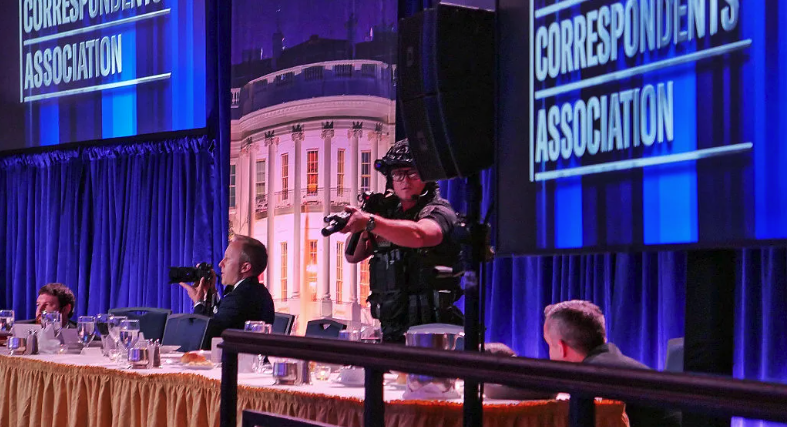
Cole Allen appeared in federal court Monday in Washington, D.C., where prosecutors outlined a series of serious charges stemming from Saturday night’s incident at the Washington Hilton. In addition to attempted assassination—which carries the possibility of a life sentence—Allen is charged with transporting firearms and ammunition across state lines and using a weapon during a violent crime.
During the brief hearing, Magistrate Judge Matthew Sharbaugh reviewed the charges and informed Allen of his legal rights. Allen, dressed in a blue jail uniform, agreed to be represented by public defenders Tezira Abe and Eugene Ohm. Prosecutors requested that he remain in custody ahead of a scheduled detention hearing later this week.
Authorities described the case as involving terrorism-related conduct. Prosecutor Jocelyn Ballantine urged the court to keep Allen detained, citing the severity of the allegations and potential risk to public safety.
According to investigators, Allen bypassed security checkpoints at the Washington Hilton, where the annual dinner was taking place, before being quickly subdued by law enforcement officers. Officials say he was stopped before reaching the ballroom where the president and hundreds of attendees were gathered.
Federal officials emphasized that security measures functioned as intended. Acting Attorney General Todd Blanche said the response by law enforcement prevented any immediate danger to the president. He noted that Allen was intercepted on a different floor, with multiple layers of security between him and the event.
However, the incident has sparked renewed debate about vulnerabilities at large-scale political gatherings. The venue, a hotel that remained partially accessible to guests, has drawn attention for its open layout. Investigators revealed that Allen had reserved a room at the hotel weeks in advance, potentially allowing him to bypass certain screening measures.
Court documents indicate Allen traveled from Los Angeles to Washington by train, stopping in Chicago along the way. Authorities say he carried a significant cache of weapons, including a shotgun, a handgun, knives, and other items described as dangerous.
Prosecutors also allege that Allen discharged a firearm during the incident, though details remain under investigation. Officials reported that an empty shotgun shell was recovered, but forensic analysis is ongoing to determine exactly what occurred. According to the complaint, security personnel heard a gunshot as Allen rushed through a checkpoint.
An officer reportedly sustained an impact to the chest but was protected by body armor. The officer returned fire, and Allen was taken into custody with minor injuries.
Investigators have not publicly confirmed a motive, but officials say they are reviewing a manifesto allegedly sent by Allen, along with digital evidence collected during the investigation.
The episode has reignited political tensions, with some officials pointing to broader concerns about rhetoric and public discourse. Blanche suggested that harsh political commentary in media and online spaces contributes to a climate that can fuel threats, a claim likely to generate further debate.
The incident has also revived discussion about security infrastructure at presidential events. President Trump and his allies have renewed calls for the construction of a dedicated White House ballroom equipped with advanced security features. Legal battles over that նախագ project are ongoing, with courts recently weighing in on whether construction can proceed without congressional approval.
“We are asking the court to keep Mr. Allen detained,” prosecutor Jocelyn Ballantine said, describing the case as involving a federal terrorism offense.
“Law enforcement performed exactly as trained,” Acting Attorney General Todd Blanche said, emphasizing that officers intervened before any immediate threat reached the president.
As the case moves forward, it is likely to remain at the center of discussions about public safety, political violence, and the challenges of securing high-profile events in an open society. The outcome may influence how similar gatherings are managed in the future.
This incident underscores the complexity of balancing accessibility and security at major public events. While officials point to a successful response, the breach itself raises difficult questions about prevention. The broader implications will likely extend beyond this single case, shaping future policy and public expectations.