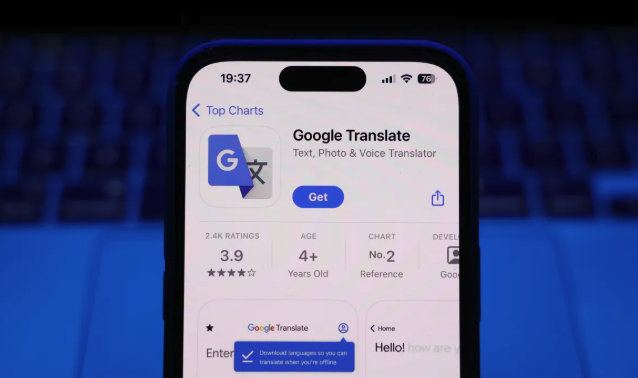
The new tool allows users to practice speaking translated phrases with real-time feedback.
Google Translate has introduced a new pronunciation practice feature, giving users a way to improve their speaking skills as the platform marks its 20th anniversary.
The update allows users to refine how they say translated words and phrases by accessing a new “Practice” section within the app. After translating text, users can tap into the feature and select a “Pronounce” option, which provides phonetic guidance and encourages them to repeat the phrase aloud.
Once a user speaks, the app evaluates their pronunciation and offers feedback on clarity and accuracy. It may highlight areas for improvement, such as unclear sounds, while also allowing users to hear the correct pronunciation for comparison.
The feature is currently rolling out in the United States and India, with support initially limited to English, Spanish, and Hindi. Google has not yet announced when additional languages will be included, but the move signals a broader push into language learning tools.
The addition brings Google Translate closer to platforms like Duolingo, which already emphasizes interactive speaking exercises. While Translate has traditionally focused on quick text and voice conversions, the new feature expands its functionality into skill-building territory.
The rollout follows other recent updates aimed at improving real-time communication. Last month, Google introduced live translation through headphones on iOS devices and broadened the feature’s availability on Android across multiple countries, including Germany, Spain, France, Nigeria, Italy, the United Kingdom, Japan, Bangladesh, and Thailand.
As Google Translate enters its third decade, the addition of pronunciation training reflects a shift toward more interactive and practical language tools. By combining translation with real-time feedback, the app is evolving into a more comprehensive resource for users looking to communicate across languages.
This update shows how translation tools are gradually blending into full learning platforms. While it may not replace dedicated apps, it offers a convenient way for casual users to build confidence in speaking. Small features like this can make a big difference in everyday communication.
References & Photo: TechCrunch
#GoogleTranslate, #LanguageLearning, #TechNews, #Google, #Pronunciation, #AI, #MobileApps, #Duolingo, #Translation, #EdTech