Rights group warns of escalating risks to civilians as military tribunals replace judicial systems in conflict-hit areas.
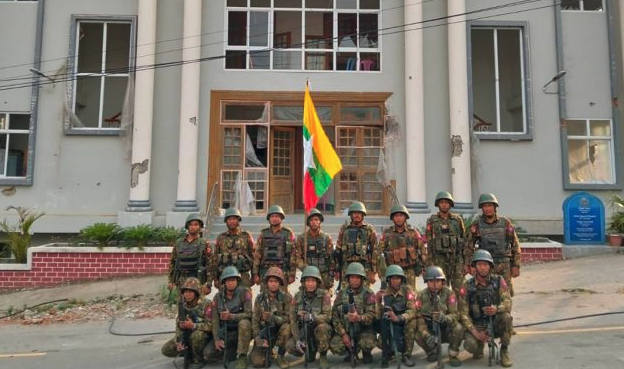
A regional alliance of lawmakers has sharply criticized Myanmar’s military leadership after it imposed martial law across dozens of townships, warning that the move deepens authoritarian control and endangers civilians. The action, announced by junta chief Min Aung Hlaing, places key conflict zones under direct military authority and replaces civilian courts with military tribunals.
The ASEAN Parliamentarians for Human Rights (APHR) issued its condemnation on April 30 following the declaration of martial law in 60 townships spanning nine regions and states, including Kachin, Kayah, Karen, Chin, Shan, Rakhine, Sagaing, Magway, and Mandalay. Many of these areas have been at the center of ongoing armed conflict.
Under the new order, administrative and judicial powers in the affected areas are transferred to military leadership, with authority concentrated under a newly appointed commander-in-chief, Ye Win Oo. Civilian legal processes are largely suspended, with most criminal cases expected to be handled by military courts.
The scope of offenses falling under these tribunals is broad. Charges include treason, acts deemed harmful to the state, interference with security forces, spreading misinformation, incitement, unlawful association, weapons violations, and serious crimes such as murder, robbery, rape, and drug-related offenses. Penalties can range from long-term imprisonment with hard labor to capital punishment, with death sentences subject to final approval by military leadership.
APHR Chairperson Mercy Chriesty Barends warned that the expansion of martial law could intensify violence against civilians while further entrenching military control. She described the move as a consolidation of power disguised within a nominal civilian framework.
Board member Wong Chen echoed those concerns, arguing that the rule of law has effectively broken down. According to him, the absence of independent courts and the elimination of appeals processes leave citizens without meaningful legal protections.
In response, APHR has called on member states of the Association of Southeast Asian Nations (ASEAN), including the current chair, the Philippines, to refrain from recognizing any political system operating under Myanmar’s military rule. The group also urged governments in the region to halt military cooperation with the junta and to publicly oppose the use of military tribunals, particularly where civilians face the possibility of execution.
Beyond political measures, the organization emphasized the need for expanded humanitarian support for communities displaced by the ongoing conflict, as conditions continue to deteriorate across affected regions.
- “This action increases the likelihood of harm to civilians and reflects a deeper consolidation of military authority,” said Mercy Chriesty Barends.
- Wong Chen stated that “the rule of law has effectively collapsed,” citing the absence of independent courts and appeal mechanisms.
The declaration of martial law across large parts of Myanmar marks a significant escalation in the country’s internal crisis, raising concerns about governance, justice, and civilian safety. As regional pressure builds, ASEAN’s response may play a critical role in shaping both diplomatic engagement and humanitarian outcomes in the months ahead.
This development underscores how quickly institutional safeguards can erode under military rule. The replacement of civilian courts with military tribunals signals a shift that goes beyond security concerns and into systemic control. How ASEAN responds could set an important precedent for regional accountability.
References: Khit Thit Media
#Myanmar, #ASEAN, #HumanRights, #MartialLaw, #MyanmarCrisis, #SoutheastAsia, #PoliticalNews, #GlobalAffairs, #ConflictZone, #HumanitarianCrisis